

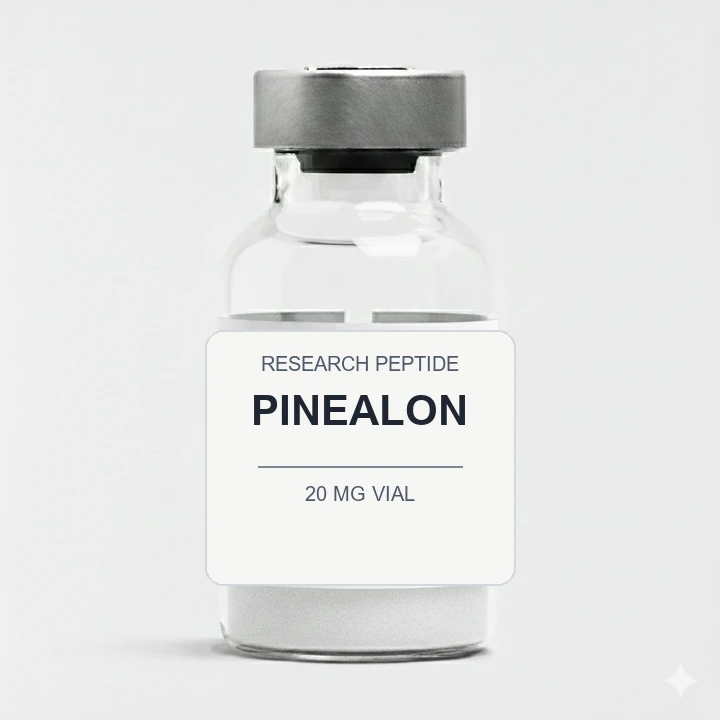
Quickstart Highlights
Pinealon is a synthetic tripeptide bioregulator (Glu‑Asp‑Arg) developed as part of Professor Vladimir Khavinson’s extensive peptide research program[1][2]. This neuroprotective peptide is studied for its ability to protect neurons from oxidative stress, support cognitive function, and modulate gene expression in brain tissue[3][4]. This educational protocol presents a once‑daily subcutaneous approach using a practical dilution for clear insulin‑syringe measurements.
- Reconstitute: Add 3.0 mL bacteriostatic water → ~6.67 mg/mL concentration.
- Typical daily range: 1.0–2.0 mg once daily for 10–20 day cycles.
- Easy measuring: At 6.67 mg/mL, 1 unit = 0.01 mL ≈ 66.7 mcg on a U‑100 insulin syringe.
- Storage: Lyophilized: freeze at −20 °C (−4 °F); after reconstitution, refrigerate at 2–8 °C (35.6–46.4 °F); avoid freeze–thaw cycles.
Dosing & Reconstitution Guide
Educational guide for reconstitution and daily dosing
Standard Approach (3 mL = ~6.67 mg/mL)
| Days | Daily Dose | Units (per injection) (mL) |
|---|---|---|
| Days 1–5 | 1.0 mg (1,000 mcg) | 15 units (0.15 mL) |
| Days 6–14 | 1.5 mg (1,500 mcg) | 22.5 units (0.225 mL) |
| Days 15–20 | 2.0 mg (2,000 mcg) | 30 units (0.30 mL) |
Frequency: Inject once daily subcutaneously, preferably in the morning or early afternoon. Standard cycles are 10–20 days, with the option to extend to 28 days if desired[5][6]. Repeat cycles can be administered every 2–3 months as needed.
Reconstitution Steps
- Draw 3.0 mL bacteriostatic water with a sterile syringe.
- Inject slowly down the vial wall; avoid foaming.
- Gently swirl/roll until dissolved (do not shake).
- Label and refrigerate at 2–8 °C (35.6–46.4 °F), protected from light.
Supplies Needed
Plan based on standard 10–20 day cycles with once‑daily administration.
-
Peptide Vials (Pinealon, 20 mg each):
- 10‑day cycle ≈ 1 vial
- 20‑day cycle ≈ 2 vials
- 28‑day cycle ≈ 3 vials
-
Insulin Syringes (U‑100):
- Per day: 1 syringe
- 10‑day cycle: 10 syringes
- 20‑day cycle: 20 syringes
- 28‑day cycle: 28 syringes
-
Bacteriostatic Water (10 mL bottles): Use 3.0 mL per vial for reconstitution.
- 10‑day cycle (1 vial): 3 mL → 1 × 10 mL bottle
- 20‑day cycle (2 vials): 6 mL → 1 × 10 mL bottle
- 28‑day cycle (3 vials): 9 mL → 1 × 10 mL bottle
-
Alcohol Swabs: One for the vial stopper + one for the injection site each day.
- Per day: 2 swabs
- 10‑day cycle: 20 swabs
- 20‑day cycle: 40 swabs
- 28‑day cycle: 56 swabs → recommend 1 × 100‑count box
Protocol Overview
Concise summary of the once‑daily regimen.
- Goal: Support neuroprotection, cognitive function, and cellular resilience in brain tissue through peptide bioregulation[3][7].
- Schedule: Daily subcutaneous injections for 10–20 days (extendable to 28 days).
- Dose Range: 1.0–2.0 mg daily with gradual titration.
- Reconstitution: 3.0 mL per 20 mg vial (~6.67 mg/mL) for accurate unit measurements.
- Storage: Lyophilized frozen; reconstituted refrigerated; avoid repeated freeze–thaw.
Dosing Protocol
Suggested daily titration approach.
- Start: 1.0 mg daily for Days 1–5 to assess tolerance.
- Increase: 1.5 mg daily for Days 6–14.
- Target: 2.0 mg daily for Days 15–20 (or up to Day 28 if extending cycle).
- Frequency: Once per day (subcutaneous), preferably morning or early afternoon.
- Cycle Length: Standard 10–20 days; repeat cycles every 2–3 months.
- Timing: Consistent daily timing; rotate injection sites.
Storage Instructions
Proper storage preserves peptide quality.
- Lyophilized: Store at −20 °C (−4 °F) in dry, dark conditions; minimize moisture exposure.
- Reconstituted: Refrigerate at 2–8 °C (35.6–46.4 °F); prepare aliquots if needed and avoid freeze–thaw.
- Allow vials to reach room temperature before opening to reduce condensation uptake.
Important Notes
Practical considerations for consistency and safety.
- Use new sterile insulin syringes; dispose in a sharps container.
- Rotate injection sites (abdomen, thighs, upper arms) to reduce local irritation.
- Inject slowly; wait a few seconds before withdrawing the needle.
- Document daily dose and site rotation to maintain consistency.
- Effects typically become noticeable after 10–14 days of consistent administration[6].
How This Works
Pinealon is a synthetic tripeptide that appears to cross cellular and nuclear membranes to interact directly with DNA, thereby regulating gene expression in brain tissue[4]. Research indicates it reduces reactive oxygen species accumulation and necrotic cell death in neurons while modulating the cell cycle to activate proliferative pathways[3][8]. Preclinical studies demonstrate neuroprotective effects against oxidative stress, ischemic injury, and cognitive decline, with improvements in memory retention and learning capacity observed in animal models[9][10]. Clinical trials in humans with traumatic brain injury and cerebral disorders have reported improvements in memory, attention, cognitive function, and emotional stability with daily administration of oral or injectable Pinealon[6][11].
Potential Benefits & Side Effects
Observations from preclinical and clinical literature.
- Neuroprotective effects through reduction of oxidative stress and preservation of neuronal viability[3][9].
- Improvements in memory, learning capacity, and cognitive function in both animal and human studies[6][10][11].
- Modulation of caspase‑3 activity may reduce apoptosis in neurons and other tissues[12][13].
- Potential support for circadian rhythm regulation and pineal gland function[14].
- Generally well tolerated; occasional mild injection‑site reactions (redness, itching) may occur with subcutaneous administration[15].
Lifestyle Factors
Complementary strategies for best outcomes.
- Maintain a balanced diet rich in antioxidants and essential nutrients to support neurological health.
- Engage in regular physical activity and cognitive exercises to reinforce brain plasticity.
- Prioritize consistent sleep schedules and stress management practices.
- Consider timing administration in the morning or early afternoon to optimize cognitive benefits throughout the day.
Injection Technique
General subcutaneous guidance from clinical best‑practice resources[16].
- Clean the vial stopper and skin with alcohol; allow to dry.
- Pinch a skinfold; insert the needle at 45–90° into subcutaneous tissue[17][18].
- Do not aspirate for subcutaneous injections; inject slowly and steadily[17].
- Rotate sites systematically (abdomen, thighs, upper arms) to avoid lipohypertrophy[19].
Important Note
This content is intended for therapeutic educational purposes only and does not constitute medical advice, diagnosis, or treatment.